

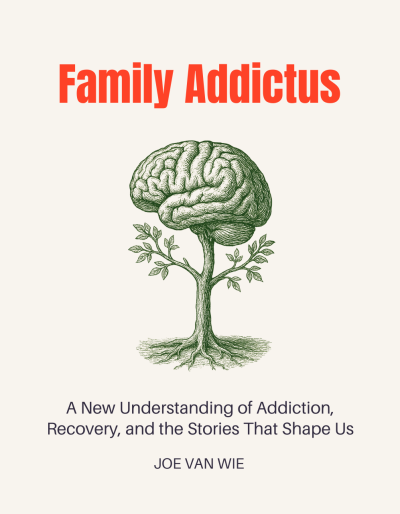
When people ask me why I wrote Family Addictus: A New Way of Understanding Addiction, Recovery, and the Stories That Shape Us, I usually pause—because the truth is layered. At one level, I wrote this book out of necessity. For years, I sat in therapy rooms and recovery meetings, listening to people and their families ask the same questions I once asked myself: Why does addiction feel like survival? Why does it tear through families? And how can we ever truly heal?
But at a deeper level, I wrote it because this story is also my story.
Addiction in My Family of Origin
My first exposure to addiction wasn’t only the chaos of drinking—it was watching my father in early sobriety and measuring that against the years that followed, up until his death. In those rooms of recovery, I saw glimpses of transformation, but I also saw the limits of what happens when the true origins of addiction aren’t understood.
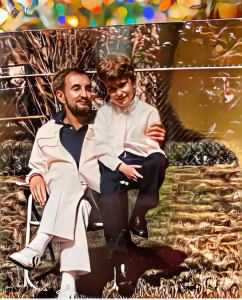
Do you need a theory of trauma or attachment wounds to get sober? No. Ninety years of recovery groups have proven that abstinence can be achieved without it. But long-term sobriety raises its own demands: intimacy, family bonding, the ability to sit in the full weight of life once the veil lifts. Without deeper insight, people can remain dry but dissatisfied—leaning on the cohesion of the hour-long meeting without addressing what lies beyond it.
I’ve been the product of both bad treatment and good treatment, and both shaped me. The failures, just as much as the breakthroughs, led me to the place where I stand now: insisting that recovery must go deeper than compliance or performance.
The Peer Bonding Effect
Another layer to my story is what happens when peers raise peers. Without stable, trustworthy adult relationships, the weight of development falls onto the pack. We imitate, reinforce, and wound each other without the compass of reliable attachment. You can see the same phenomenon in chimp colonies—peer groups improvising rules in the absence of elders. That lack of secure adult anchoring shapes our ability to bond, trust, and grow into intimacy later in life.
Repeating the Pattern: My Own Addiction
Years later, addiction found me. My substance use was more than reckless behavior—it was survival. It was how I learned to numb pain, escape disconnection, and quiet the noise of unresolved wounds. But in the process, I became what I feared as a child: someone whose addiction reshaped everyone around him.
Addiction doesn’t just live in the individual; it lives in the family system. My father’s patterns bent our family, and my own addiction bent it further still.
From Survival to Understanding
When I finally entered recovery, I had to ask difficult questions: What actually happened to me? Why did my brain cling to these substances as though they were life or death? How do families recover together, not just separately?
The answers came from neuroscience, psychology, spirituality, and thousands of hours of listening. Addiction is not a moral failure—it is a biological adaptation to trauma and disconnection. The brain’s survival circuits can override logic, making substances feel like oxygen. Recovery, then, must be more than abstinence—it must be about rebuilding identity, meaning, and belonging.
Why I Wrote Family Addictus
I wrote this book to give language to lived realities: to explain how trauma in the first thousand days of life shapes attachment and coping, how family systems absorb addiction like shockwaves, and how patterns repeat until they’re interrupted with awareness and healing.
Most importantly, I wrote it to show that recovery is possible—and it’s bigger than sobriety. It’s about creating new narratives, new systems of connection, and new ways of belonging.
That’s why I introduced the Twelve CORES, a framework that goes beyond avoiding substances. These dimensions—creativity, opportunity, relationships, education, spirituality, and more—offer individuals and families a roadmap toward wholeness.
A Call to Families
If you grew up in a household where addiction lived, you know its echoes. If you’ve struggled yourself, you know how shame silences healing. Family Addictus is written to break that silence.
It’s not only for the person in active addiction. It’s for the parents wondering how their children will be affected, the children confused by their parents’ drinking, the spouses and siblings longing to move from blame to understanding.
Closing Thoughts
My father’s early sobriety shaped me. My own addiction nearly destroyed me. And both good and bad treatment left marks that taught me what endures and what fails. Out of those cycles came this realization: addiction is not the end of the story.
When we see addiction as survival—an adaptation, not a defect—we can chart new pathways to healing.
Family Addictus is part science, part memoir, and part invitation: to rethink addiction as a family disease, and to embrace recovery as a family journey.