

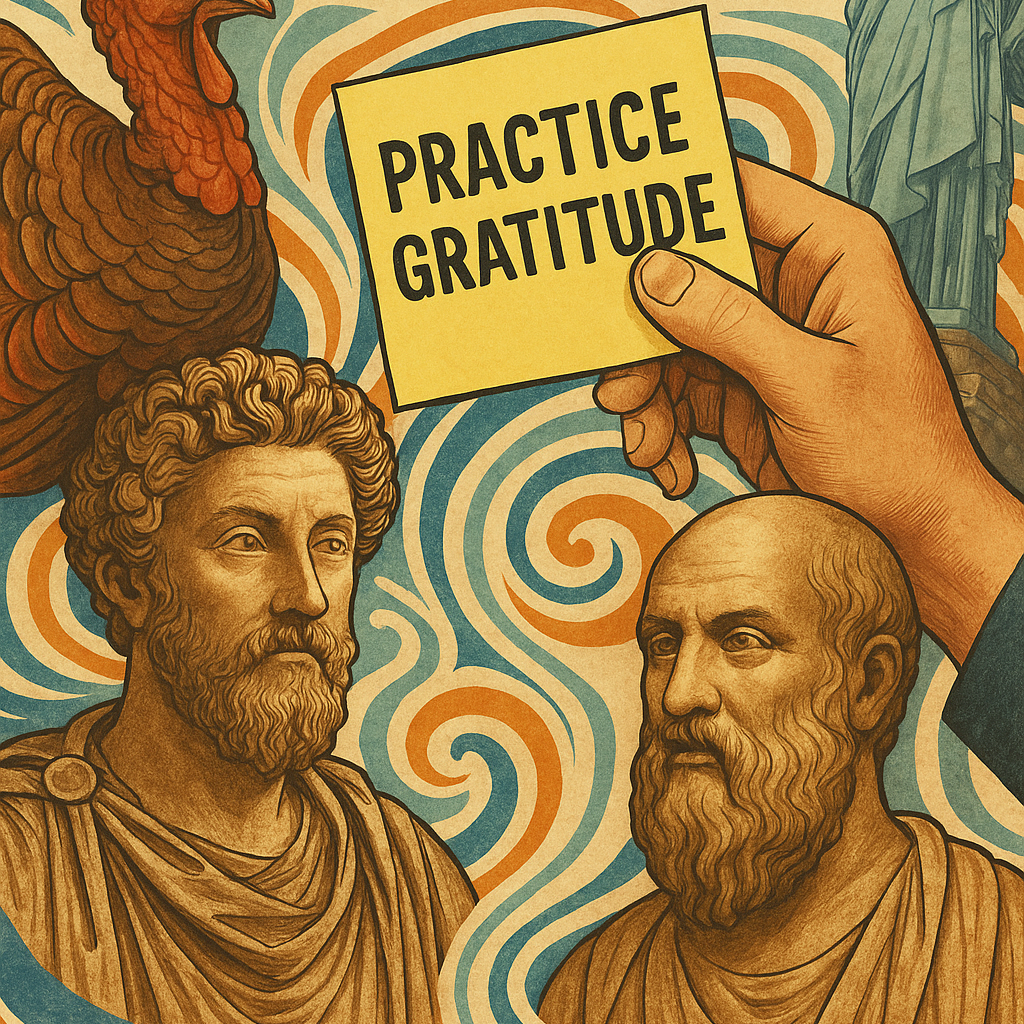
Every November, this country performs its annual ritual of gratitude: tables dressed, stories shared, a collective attempt to feel thankful on cue. And like most rituals, it carries both sincerity and a layer of performance. Thanksgiving itself is a complicated mirror: warm myth on one side, a harsher and biased history on the other. If we are honest, the holiday is a blend of truth and story, connection layered on top of conquest. And yet, inside that tension is something still worth practicing: the discipline of gratitude.
I learned the difficulty of this practice early, at 16 or 17, sitting in Thanksgiving morning meetings at Marworth. At 9 a.m. sharp, a hundred people would form a giant circle and take turns rattling off what they were grateful for. I remember watching myself compete quietly, creatively, trying to offer something original, something simple, something that made me look humble. Even then, I could feel the artifice in the exercise. Not because it was dishonest, but because gratitude is hard, and at first, it is always going to feel like you are faking it.
But fake is what practice looks like at the beginning of any discipline. The Stoics understood this long before self help, long before the recovery movement that would rediscover their wisdom. From Zeno of Citium to the pop culture saint of the ancient world, Marcus Aurelius, Stoicism insisted that gratitude was not a mood, it was a skill. And in that skill, they believed something radical: to become aware of a negative emotion is to become responsible for directing it.
The Stoics were the first in the Western world to say what Buddhist and Eastern traditions had long known: life must be seen clearly before it can be appreciated. Gratitude is not the weather. It is navigation. It is the act of placing your hand back on the wheel when your mind wants to drift into complaint, fear, or lack.
That is why forced gratitude feels unnatural. It is unnatural at first.
But if you stay with it, something changes. Phil Stutz calls this practice the Gratitude Flow, a quiet listing of tiny things you are thankful for, eyes closed, letting the imagination warm like kindling. The point is not profundity. The point is momentum. Something as small as sunlight on your shirt or the privilege of breath is enough to tip the scale. Eventually the artificial start gives way to something real: the recognition that existence itself is improbable. And that improbable fact alone is worth a daily bow.
Another simple tool is what I call the Wide Lens. Step out of your skull and see your life from 30,000 feet. We have all seen the cosmic zoom outs in films: Earth shrinking to a dot, our lives shrinking with it. When I do this, my frustrations shrink with the frame. It is humbling in the most therapeutic way. The truth hits:
I am small, but not alone.
I am alive, but not self made.
Someone else stitched these clothes. Someone built the roads. A world carried me here.
Gratitude is the antidote to the illusion of isolation.
And in recovery, it is more than antidote. It is armor. It has been said for decades:
A grateful drunk will not drink.
Corny, maybe. But the longer I stay sober, the truer it gets. Gratitude is a position you stand in, not a feeling you wait for. It lets you revisit the past without drowning in it. It lets you look at the future without fearing it. It pulls you out of rumination and drops you back into the day you are actually living.
Some of the worst days of my life, grief, illness, loss, now serve as touchstones. When trivial annoyances start steering the wheel, I revisit those memories not to suffer them but to remember scale. Probability says I should not be here. But I am here. Alive. Awake. Thankful.
And that is enough for today.
A Brief Historical Lens on Thanksgiving
Before it became a Norman Rockwell painting, Thanksgiving emerged from a collision of cultures, some hopeful, some tragic. The 1621 feast between the Wampanoag people and the Pilgrims did happen, but the story we were taught as children erases the violence, epidemics, displacement, and broken treaties that followed. Gratitude wrapped in myth is still gratitude, but it demands honesty.
If Thanksgiving has value today, it is not because the story was pure. It is because people still gather, still feed each other, still try, however imperfectly, to name what is good.
How To Practice Gratitude: Exercises For Today
1. The Gratitude Flow (Phil Stutz)
Sit still. Eyes closed. List tiny things: light, breath, warmth, socks, coffee. Build momentum. Let the emotion arise after the practice.
2. The Wide Lens
Picture yourself from above: your city shrinking, your street, your home, your body. Let the scale soften your fears.
3. Reverse Perspective
Imagine losing something you take for granted: your bed, your eyesight, your morning routine. Feel their return.
4. Gratitude Through Service
Find one small act today: a call, a dish washed, a favor done. Gratitude grows strongest when given away.
5. Gratitude as Pause
When anger or fear spikes, pause and ask: What is actually happening right now, and what is still good
This interrupts rumination long enough to steer your mind back to truth.
6. Visit the Hard Days
Revisit a past crisis that you survived. Let that resilience be evidence, not story.
7. Gratitude List for the Skeptic
Write down three things you appreciate that feel embarrassingly small. These are usually the truest.
References & Suggested Readings
- Marcus Aurelius, Meditations
- Epictetus, The Enchiridion
- Zeno of Citium, fragments and teachings
- Phil Stutz and Jonah Hill, Stutz (Netflix documentary)
- William B. Irvine, A Guide to the Good Life: The Ancient Art of Stoic Joy
- Robert Emmons, Thanks
- David Steindl Rast, A Good Day (TED Talk)
- Wampanoag History Project
- Roxanne Dunbar Ortiz, An Indigenous Peoples History of the United States